M-Pesa Paybill Reconciliation for SACCOs: Why It's Harder Than It Looks
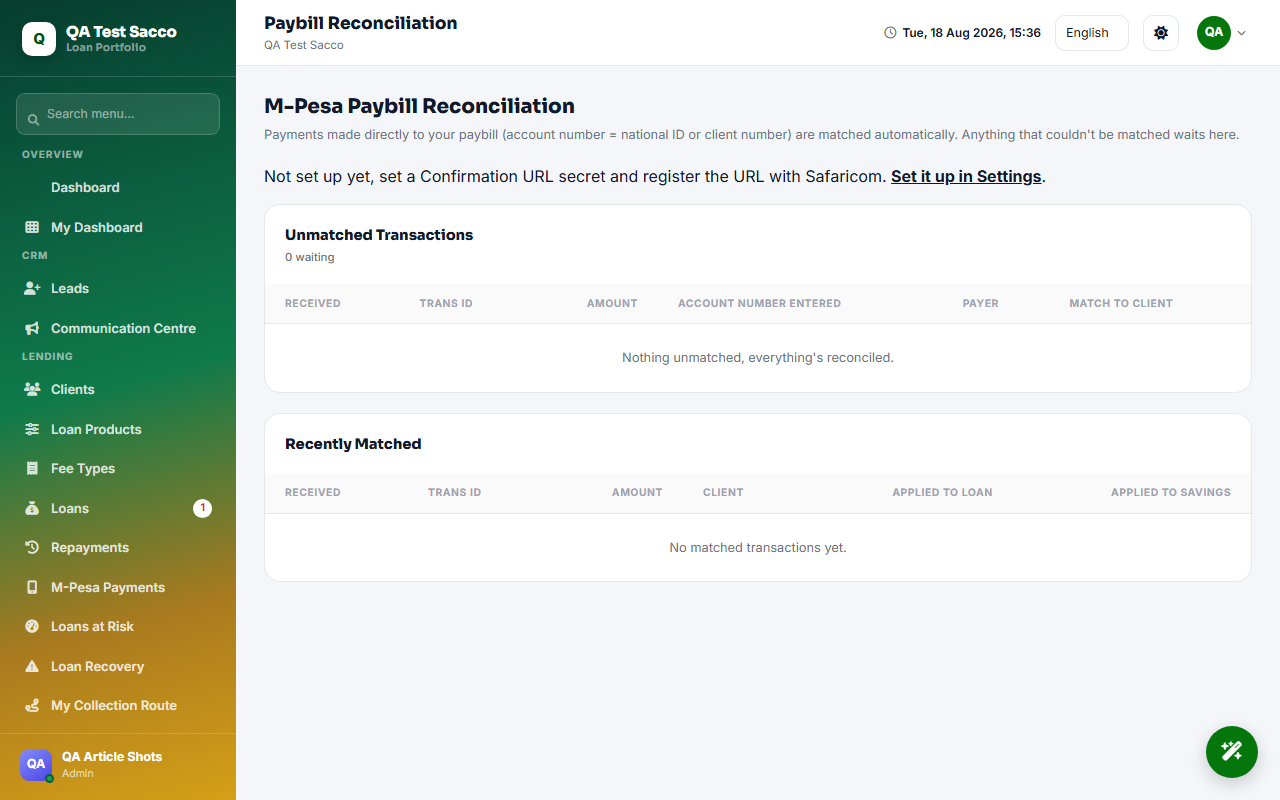
An M-Pesa paybill number is one of the best things to happen to SACCO collections in years, members can pay a loan installment or top up savings from their phone, any time, without a teller involved at all. The problem most SACCOs discover only after they've turned it on is that receiving the money is the easy part, matching it to the right member and the right account is where it actually gets hard.
Every paybill payment arrives with an account number field the payer typed in themselves, and people get it wrong constantly, a transposed digit, a member number instead of an account number, an old account that was replaced, or simply nothing meaningful typed in at all. At low volume, a bookkeeper can manually chase down every ambiguous payment. At real volume, dozens or hundreds of payments a day, manual reconciliation turns into a permanent, growing backlog of unmatched money sitting in limbo, not credited to anyone, while the member who paid it assumes their account is already up to date.
A real reconciliation process needs to do three things automatically: match the obvious cases instantly (a correct, exact account number), flag the ambiguous cases for a human to resolve quickly rather than losing them in a general transaction list, and keep a clear, auditable trail of exactly when a payment was matched, to which account, and by what confidence, exact match or manual override.
The cost of getting this wrong isn't abstract, it shows up as members disputing balances that are actually correct on the SACCO's side (the payment just hasn't been matched yet), and as real unmatched cash sitting unreconciled on the books, which is exactly the kind of gap an audit will flag.
pawa Loans's M-Pesa paybill reconciliation automatically matches incoming payments against member and account numbers, surfaces anything ambiguous for quick manual resolution instead of losing it in a generic transaction feed, and keeps a full audit trail from receipt to matched account, so a paybill number is genuinely hands-off rather than a slow-growing backlog.
Frequently asked questions
Why doesn't a paybill payment automatically know which member it's from?
Because the account number field is typed in by the payer themselves, and people get it wrong constantly, a transposed digit, an old account number, or nothing meaningful at all.
What happens to payments that can't be matched automatically?
They should be flagged into a reconciliation queue for quick manual resolution, not lost in a general transaction list.
What is the real cost of poor reconciliation?
Members disputing balances that are actually correct (the payment just hasn't been matched yet), and real unmatched cash sitting unreconciled on the books, exactly what an audit will flag.
Ready to run your SACCO, chama, or microfinance from one dashboard?
Get started