Reducing Balance vs Flat Rate Interest: Which Costs You More?
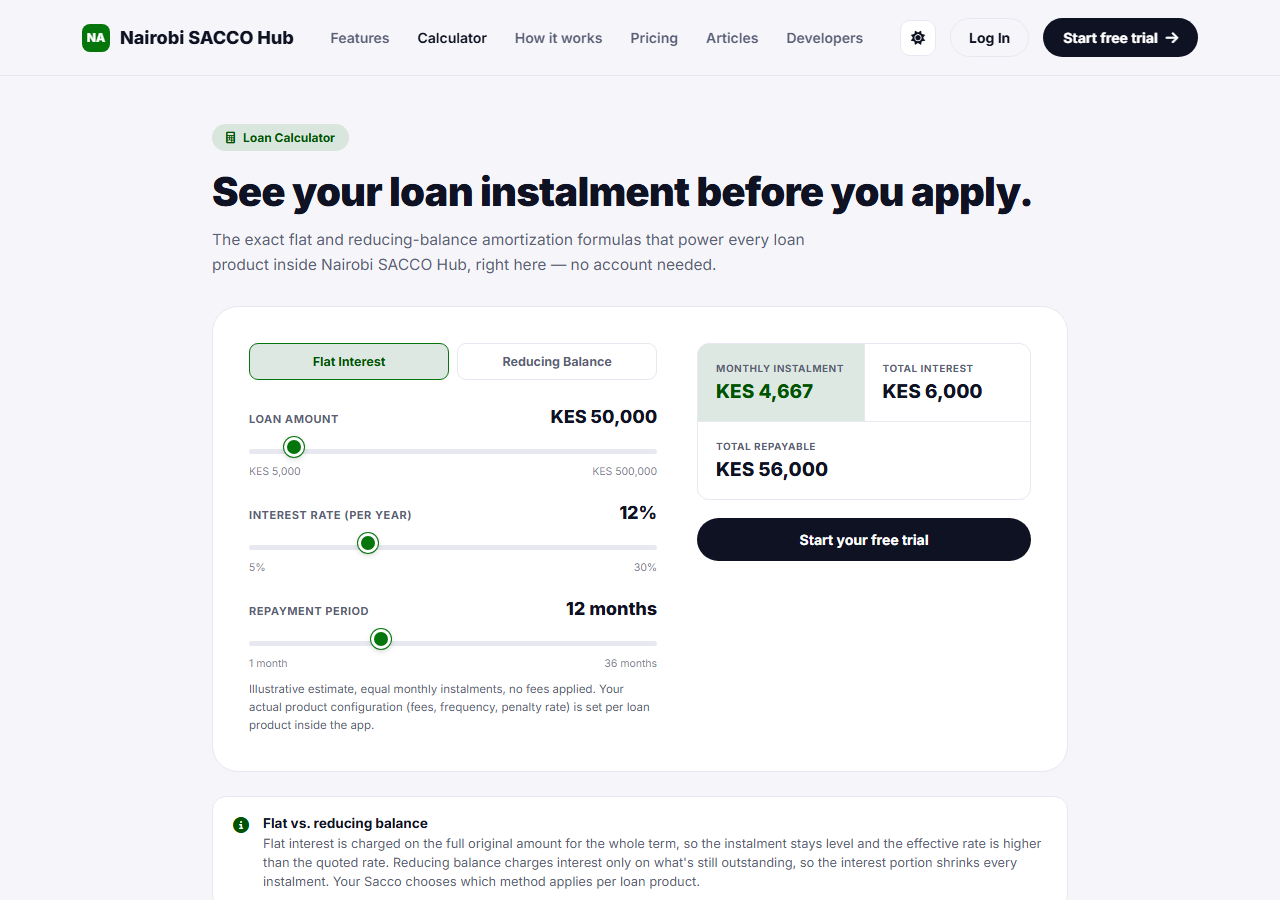
Ask two lenders for a "12% loan" and you can end up with two very different bills, because "12%" doesn't mean the same thing under flat rate and reducing balance interest.
Under flat rate interest, the interest is calculated once, on the original principal, and spread evenly across every installment for the full loan term — even though you're steadily paying down the principal along the way. Borrow KES 100,000 at 12% flat for 12 months, and you'll pay 12% of 100,000 (KES 12,000) in interest for the year, split into equal monthly charges of KES 1,000, regardless of how much principal you've already repaid by month 8 or month 11.
Under reducing balance interest, the interest is recalculated every period on whatever principal is still outstanding. Early installments cost more in interest because the full balance is still owed, but every repayment shrinks the base the next interest charge is calculated on. Over the same 12 months, a reducing-balance loan at the same 12% rate ends up costing noticeably less in total interest than the flat-rate version — because you're never charged interest on money you've already paid back.
The practical rule of thumb: a flat rate of X% works out to roughly double that as an effective annual rate compared to reducing balance, though the exact gap depends on the term and repayment frequency. This is why comparing two loan offers by their stated percentage alone can be misleading — always ask which method is being used, or better, ask for the total interest amount in shillings over the full term.
For a SACCO or lender, offering reducing balance is fairer to long-standing, reliable borrowers, while flat rate is simpler to explain and administer by hand — one reason many informal lenders default to it. A system that can run either method correctly, and show a borrower the real schedule before they sign, removes the guesswork entirely. pawa Loans supports both interest methods per loan product, so a SACCO can offer the fairer method without needing anyone to compute an amortization table by hand.
Frequently asked questions
Which interest method is cheaper for the borrower?
Reducing balance is materially cheaper over the life of the loan, since interest is only charged on what's still outstanding rather than the full original amount for the whole term.
Why do two loans with the same stated rate cost different amounts?
Because "12%" means something different under each method, flat rate charges that 12% on the original principal for the full term, while reducing balance recalculates it on the shrinking balance every period.
How can I tell which method a lender is using?
Ask directly, or ask for the total interest amount in shillings over the full term rather than comparing the stated percentage alone.
Ready to run your SACCO, chama, or microfinance from one dashboard?
Get started